


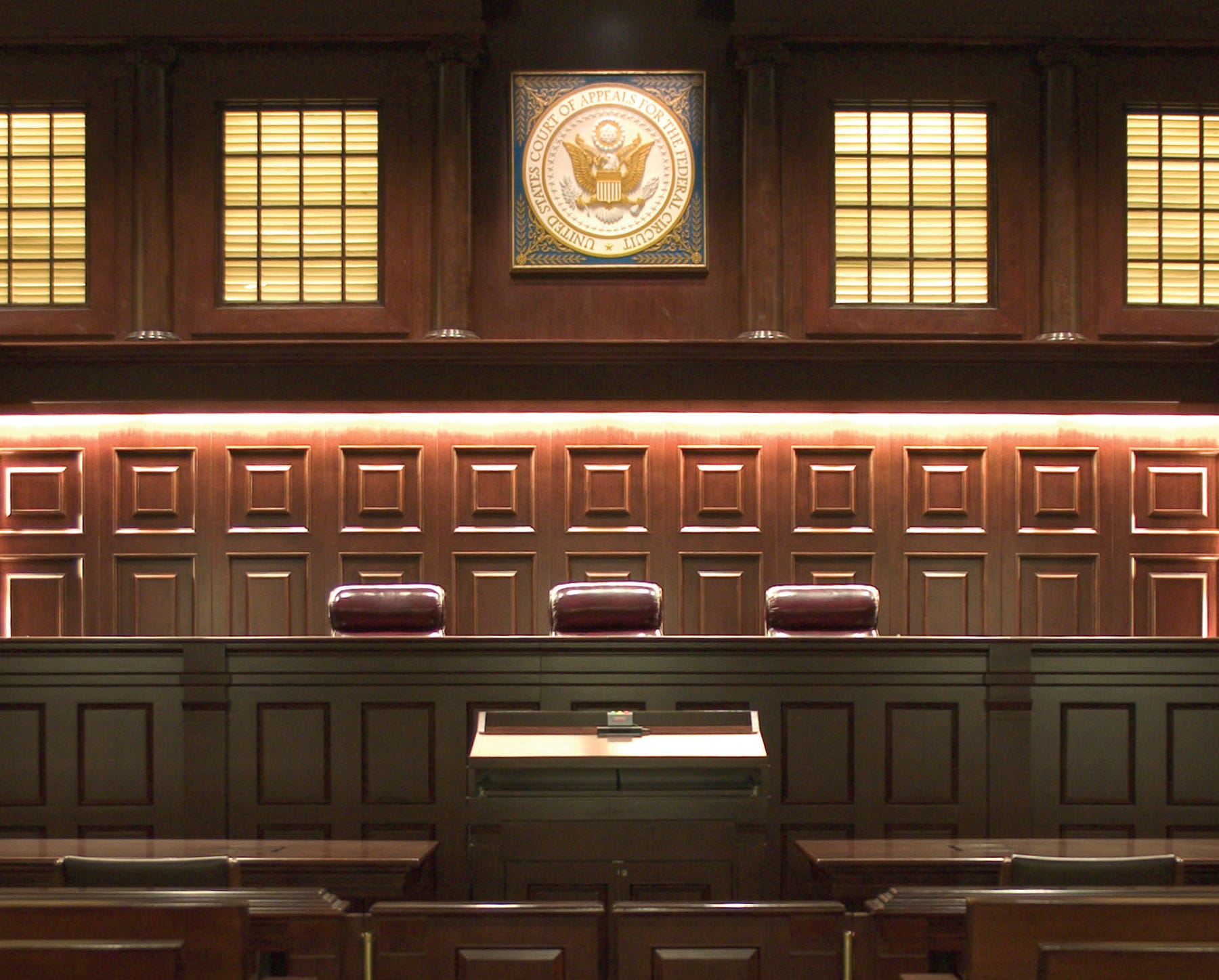
The full U.S. Court of Appeals for the Federal Circuit will soon hear what is perhaps the most important legal case affecting federal employees since 1883: Jackler v. Merit Systems Protection Board (MSPB).
In April, Justice Connection filed an amicus brief encouraging the Federal Circuit to hear the case en banc, and the Court agreed. Justice Connection filed another amicus brief in July advocating that the Federal Circuit uphold the statutory rights of federal civil servants by reversing the MSPB’s decision in Jackler.
Now, U.S. senators and representatives, federal employee unions, advocacy groups, former and fired Equal Employment Opportunity Commission senior officials, former Office of Personnel Management directors, legal scholars, bar associations, and preeminent federal sector attorneys are weighing in. The docket sheet is a who’s-who in the fight to save the non-partisan civil service.
My interest in this fight is both personal and academic. I am a former Department of Justice Civil Rights Division Trial Attorney in the Employment Litigation Section. I was terminated in August 2025. I appealed my termination to the MSPB, and my appeal is pending. I went into private practice and, in spring 2026, I taught Employment Law at the University of Baltimore School of Law. As part of a federal employment unit on my syllabus, I made the MSPB’s decision in Jackler v. Department of Justice, and the Office of Legal Counsel opinion underlying it, required reading.
How Federal Employment Law Works
To understand what is at stake for federal public sector employees, we must first look to the private sector. There is a maxim in employment law I have often repeated to both my clients and my students: at-will employees can be fired for any reason or no reason, except illegal reasons.
Most private sector employees in the United States are at-will. Before the government began regulating employment relationships, there were almost no illegal reasons to fire someone. Freedom of contract dominated employment relationships—the employer was free to fire, and the employee was free to quit, and any other aspects of their relationship could be negotiated between the two, free from government interference.
The problem with freedom of contract is that employment relationships are inherently imbalanced. Employers almost always bring more resources and sophistication to the negotiating table than individual employees. And the employee usually stands to lose much more from being fired—economic security, personal identity—than the employer stands to lose from a single employee quitting. Other employees can probably absorb the former employee’s work until a replacement is hired.
But since the New Deal, the federal government has passed a mosaic of statutes regulating employment relationships that seek to offset the power imbalance between employers and employees. These statutes do so by creating a category of illegal reasons for which employers cannot terminate employees. For example, it is illegal to terminate employees for engaging in collective bargaining and union organizing; in retaliation for opposing unpaid wages or overtime; on the basis of sex, race, age, disability, or other protected categories; or in retaliation for complaining about workplace safety.
This collection of federal employment statutes protects both private and public sector employees. But federal employees have long had more job security than private sector employees. More than half a century before American workers gained even the most basic right to minimum wage and overtime in 1938 under the Fair Labor Standards Act, federal employees gained the right not to be fired for political reasons under the 1883 Pendleton Civil Service Reform Act. And in 1912, Congress decided that career federal employees would not be at-will. The Lloyd-La Follette Act provided that federal employees could only be fired “for such cause as will promote the efficiency of” the “service,” and must receive notice of proposed removal and an opportunity to contest it. In 1978, with the Civil Service Reform Act (CSRA), Congress created the uniform system federal employees know today—due process protections such as written notice of proposed removal, an opportunity to respond, and a review of the agency’s decision before an MSPB administrative judge.
Functionally, this has meant that career federal employees are not at-will, as most private sector employees are. Career federal employees cannot be fired for any reason or no reason. Instead, there must be a good reason—a non-political reason—and they must be given notice and due process.
At first glance, you might think that what is at stake in Jackler is cause protection for certain career federal employees like the plaintiffs: immigration judges within the Executive Branch. But the situation is much more dire, especially for DOJ line attorneys. If the Federal Circuit upholds the Board’s decision, it will create a new and burgeoning underclass of career federal employees who can be fired for any reason or no reason, including otherwise illegal reasons—denying them statutory rights that even at-will private sector employees enjoy.
An MSPB Captured By the White House
Megan Jackler and Brandon Jaroch were immigration judges at DOJ. Each received a termination letter that provided no justification. They received no advanced notice and no due process. Judges Jackler and Jaroch filed complaints with the MSPB, arguing that, under the CSRA, they were employees who could only be fired for cause and were entitled to due process they did not receive. The government claimed a “constitutional defense” to the MSPB’s jurisdiction. Under Article II, the argument goes, they were “inferior officers” who could be fired at-will, and therefore the CSRA is unconstitutional as applied to them, leaving the MSPB without jurisdiction to hear their appeal. The administration judge assigned to the case refused to hear the constitutional defense on the grounds that, under longstanding precedent, the MSPB cannot invalidate a statutory provision on constitutional grounds. (It is well-settled, and not at issue here, that the MSPB does have jurisdiction to review employees’ constitutional claims that adverse employment actions violate, for example, the First Amendment, or other constitutional provisions.) The judge found in favor of Judges Jackler and Jaroch.
DOJ then asked the MSPB to review the administrative judge’s decision. The MSPB is supposed to be independent, bipartisan, and consist of three members: a Chair, Vice Chair, and Member. Not more than two MSPB members may be members of the same political party. When President Trump’s second term began, the Board consisted of two Democrats and one Republican. In February 2025, President Trump fired one Democrat, Cathy Harris, and the other Democrat retired before his term was up, leaving one Republican, Vice Chairman Henry Kerner, who became Acting Chairman, and no quorum. Many feared a repeat of Trump’s first term, wherein the Board did not have a quorum for five years, and thus could not hear appeals of administration judge decisions, creating a massive backlog and preventing many litigants from reaching the Federal Circuit. But in October 2025, the Senate confirmed a second Republican, Member James Woodruff, so the Board currently consists of two Republicans and no Democrats.
The White House has used the Jackler/Jaroch case to capture the Board in public and private ways. On the same day DOJ petitioned the Board to review this case, the Office of Legal Counsel (OLC) released an opinion supporting DOJ’s position that the MSPB lacks jurisdiction to adjudicate constitutional defenses such as under Article II. The OLC opinion is highly unusual in a few ways:
It opines on questions likely to arise in pending litigation. OLC typically avoids opining when litigation is pending or imminent.
It was requested by White House counsel, not the MSPB. OLC opinions are traditionally only binding on the agency that requests the opinion as well as any agencies that decide to adopt the opinion.
In its appeal to the MSPB, DOJ took the extraordinary step of arguing that the Board, designed to be an independent, adjudicatory agency, is bound by the OLC opinion simply because MSPB is part of the Executive Branch.
According to public reporting, in a private meeting between the White House, the U.S. Department of Labor, and Vice Chairman/Acting Chairman Henry Kerner—which was meant to be Kerner’s interview for nomination to the Chairmanship—the administration officials told him they believed he was bound to follow the OLC opinion.
These extreme irregularities raise fundamental questions of fairness. How can due process possibly exist if the defendant is the judge’s boss, the judge knows the defendant can fire him at any time, the judge is up for a promotion only the defendant can give him, and during the interview for that promotion, the defendant basically tells the judge how to rule?
The Board dodged the question of whether it is bound by an OLC opinion. But it ruled for DOJ, anyway. Kerner was not fired, and one wonders if he would have been had he ruled against the administration. But it appears that his small act of defiance—not conceding that the Board is bound by the OLC opinion—lost him the Chairmanship nomination. Less than a month after the March 20 opinion was issued, the White House nominated Kerner’s Republican colleague, James Woodruff, to the Chairmanship.
Balls and Strikes: The MSPB Reinterprets the Role of Judges
Unlike the administrative judge, the MSPB concluded for the first time in the agency’s nearly 50-year history that it does have the authority to consider (1) constitutional challenges as part of its jurisdictional analysis, and (2) the government’s constitutional defense as an as-applied challenge.
The Board articulated a brand-new test: if a federal employee is an “inferior officer” and has significant duties, such as policymaking and administrative authority, the CRSA is unconstitutional as applied to them, so they lack “for cause” firing protection and cannot appeal their terminations to the MSPB.
The MSPB found that Judges Jackler and Jaroch are inferior officers because the Supreme Court has found that administrative law judges in another agency are inferior officers. The Board also determined that immigration judges exercise significant duties, including policymaking and administrative authority, because their decisions impact domestic and foreign policy, and their decisions are final unless appealed.
In the Board’s view, immigration judges tasked with impartially applying the law to the facts in adjudicatory proceedings are somehow engaged in “policymaking.”
Which raises the question: do the Board’s members view MSPB judges as being tasked with impartially applying the law to the facts in adjudicatory proceedings? Or are they, too, “policymaking”? We do not have to wonder. Following the Supreme Court’s decision in Trump v. Slaughter, the MSPB is no longer calling itself an “independent” agency.
Chief Justice John Roberts is famous for testifying at his nomination hearing that a judge’s job is to “call balls and strikes, and not to pitch or bat.” But apparently, in the MSPB’s view, if a judge finds themselves within the Executive Branch, they pitch or bat for the President, or they get benched (read: fired with no due process) and replaced with someone who will.
Two Reasons Why the Federal Circuit’s Decision Is So Critical
There are at least two reasons the litigation before the Federal Circuit is so vital to the Justice Department as an institution.
First, if the Circuit upholds the MSPB’s decision, this newfound at-will firing power will not remain confined to administrative judges for long. If judges applying the law to adjudicate disputes are “policymaking,” is not every federal employee enforcing the law or regulating anything also “policymaking”?
The administration will push to categorize as many federal employees as possible as “inferior officers,” including DOJ line attorneys. For example, DOJ has cited “Article II” as its justification for firing over 160 employees—including former Southern District of New York Assistant U.S. Attorney Maurene Comey.
Second, if the source of at-will firing power is not the common law of contract but Article II of the Constitution, all the federal statutes that protect private sector employees risk becoming unconstitutional as applied to career federal employees who are, in the MSPB’s view, “policymaking,” “administrative authority”-wielding, “inferior officers.”
This could mean that if the government fires such an employee for objecting to unpaid wages pursuant to Article II, then the Fair Labor Standards Act simply wouldn’t apply. Or, if the government decided to fire all such Black employees pursuant to Article II, relief under Title VII of the Civil Rights Act of 1964 would be unavailable. Not even those statutes specific to federal employees — such as the Pendleton Act, CRSA’s protection against political firings, and the Whistleblower Protection Act’s prohibition on firing whistleblowers — would protect them. Such employees would only have the rest of the Constitution at their disposal, and courts would be left to balance the Article II firing power against equal protection claims, free speech claims, and the like.
These hypotheticals are not merely an academic exercise. At a pre-trial hearing in Maurene Comey’s case, the judge pressed the DOJ attorney on some of these.
At the hearing, the DOJ attorney stated that Ms. Comey’s firing was valid “even if there were political motivations”—meaning that the Pendleton Act and CRSA’s prohibition against political firing must be unconstitutional so as not to limit the Article II firing power.
Judge Furman pressed whether Article II empowered the President to fire people to achieve an “all-white executive branch? Or all-[B]lack?” Politico reports that the DOJ attorney stammered and then finally said, “I can’t answer on behalf of the government.” To which Judge Furman replied, “You’re here representing the government.”
Yikes. With the administration’s extreme and unsavory positions putting DOJ attorneys in situations like this, it is no wonder that DOJ has lost a third of its attorneys during this administration. I imagine many AUSAs would rather quit than defend the wanton and malicious firing of another AUSA. When senior career DOJ attorneys do the dirty work of handling high-profile cases like this one, it means that the other folks in their office—who may be earlier in their legal careers, with much more to lose reputationally—don’t have to. Hence the terrible moral position many senior career attorneys remaining in the department find themselves in.
Following this hearing, DOJ moved for judgment on the pleadings for all of Ms. Comey’s claims, and Ms. Comey moved for judgment on the pleadings for five of her nine claims. The Court has yet to decide on the motions.
At least one U.S. District Court has already rejected the administration’s argument—which the Board adopted in Jackler—that Article II empowers the President to fire inferior officers and renders statutes protecting employees unconstitutional as applied.
Former FEMA CFO Mary Comans sued in the Eastern District of Virginia arguing that, by firing her and publicly denigrating her, both without due process, the administration deprived her of both her property interest in her continued federal employment as guaranteed by the CRSA and her reputational liberty interest as guaranteed by the Fifth and Fourteenth Amendments.
The Court recently granted summary judgment to Ms. Comans. The Court doubted that she was an inferior officer, but found that, even assuming she was, the CSRA is constitutional as applied to her. Unlike the MSPB, the Court relied on a long line of Supreme Court precedent stating that Congress may limit the President’s power to remove inferior officers, and did so with the CRSA.
It’s only because DOJ employees and other federal employees are investing their time, emotional energy, and resources challenging their unlawful terminations that the Federal Circuit will be able to hear cases like Jackler. Judges Jacker and Jaroch, as well as Maurene Comey, Mary Comans, and the many others who have filed MSPB challenges are on the front lines of the fight over the President’s power to overhaul the civil service.
The Federal Circuit will either preserve the longstanding and vital protections Congress created through the CSRA or destroy them, leaving federal employees vulnerable to being fired for any reason, no reason, or reasons that would be illegal if they were private sector employees. One thing is certain—Jackler will be one of the defining moments in the struggle to save the non-partisan civil service.
Kacie Candela served in the Employment Litigation Section of the Civil Rights Division as a Law Clerk from 2022 to 2023 and a Trial Attorney from 2023 to 2025 and currently works as a Clinical Teaching Fellow in the Georgetown University Law Center Civil Rights Clinic (CRC). The views expressed here are her own and do not necessarily represent those of Georgetown Law, the CRC, or its clients. Of note, CRC represents Lawyers Defending Democracy in its amicus brief in Jackler v. MSPB, which was filed before Ms. Candela began working there.

An excellent article! Lucid and persuasive. Even a lay person can understand the major freedoms at stake care. Thank you for writing this.
Outstanding piece. Thanks for fighting this fight!