

The Attack on the Capitol: We Remember
Remembering, with moral clarity, how our democracy was attacked is essential. Five years later, it might be one of the most important things left to do.

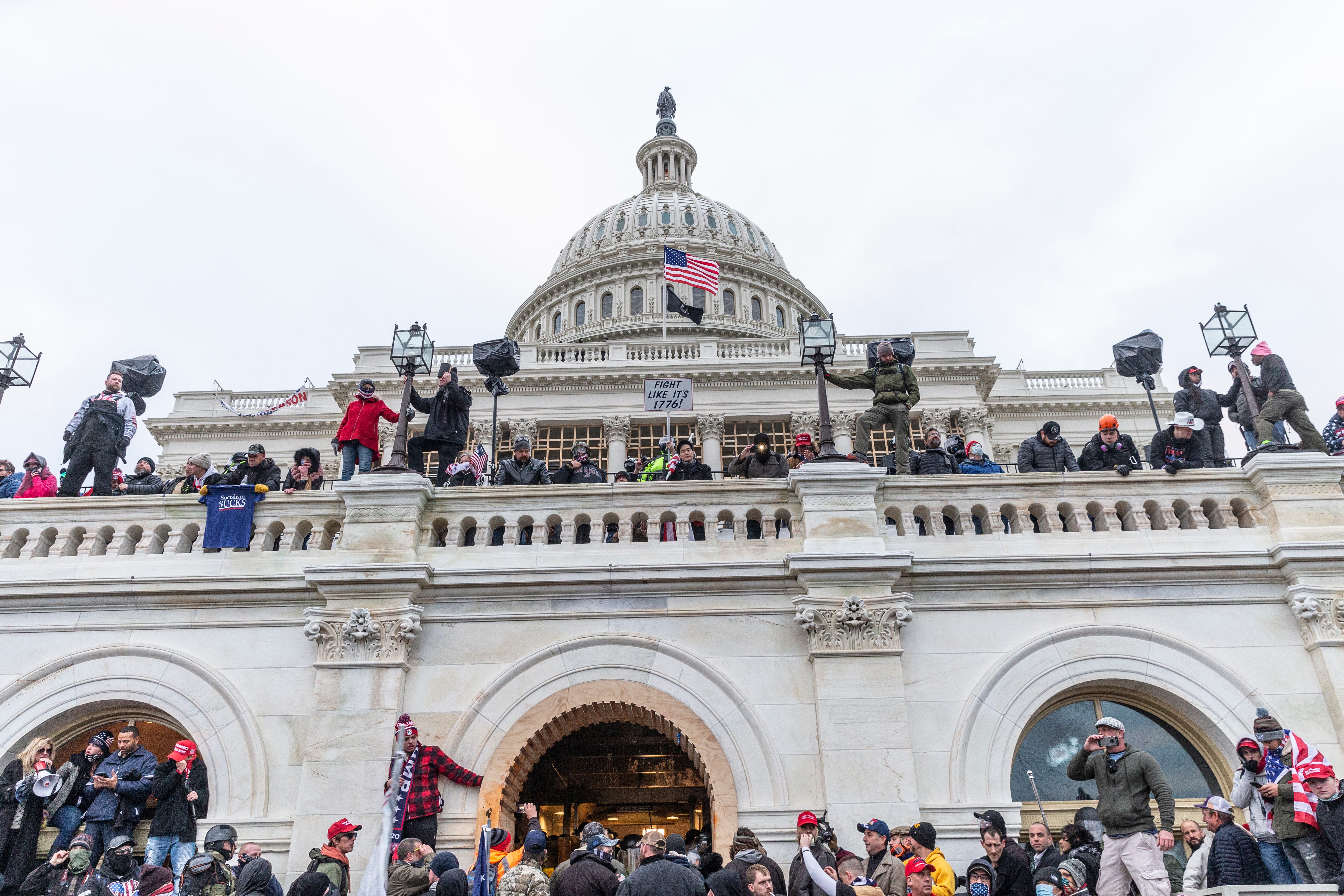
I led the team of lawyers and paralegals who prosecuted the Capitol rioters. For four years, we worked to hold accountable a group of defendants that included individuals who had assaulted police officers, tried to disrupt the peaceful, constitutional transfer of power, and threatened the safety of the vice president and hundreds of members of Congress. We prosecuted cases one by one — through pleas, trials and sentencings. We did it by the book. Our court filings repeated a basic truth: that what happened on Jan. 6, 2021 was wrong. Over and over, judges appointed by presidents of both parties, including by President Trump, agreed. So did more than 100 juries.
Then came Jan. 20, 2025. With sweeping and indiscriminate Inauguration Day pardons and commutations, over 1,500 people walked free, had their convictions nullified or had their cases dismissed, somehow recast as victims, despite the constitutional due process each and every one of them was afforded and received. President Trump’s message was unmistakable: that whom you support politically matters more than your actions, even when you commit crimes.
His other message: that the cold, exhaustively documented facts of a tragic day were somehow negotiable. That by granting clemency, he was righting, as he claimed, “a grave national injustice that has been perpetrated upon the American people.” The historical record could be distorted beyond recognition.
Over the past five years, Americans of all stripes have continued to debate the meaning of Jan. 6. About the role of the president that day. About the extent of the danger. About the many unfounded conspiracy theories. Is there anything left to do or say?
Yes: Remember the truth of what happened. The responsibility no longer lies with the justice system. It lies with all of us.
Virtually every American has seen the images from that day: the hand-to-hand combat, officers doused by pepper spray and trapped by surging crowds, congressional staff members barricading themselves in their offices. No matter who we voted for, we all recognize what we saw. Yet near the end of the 2024 presidential race, President Trump described the Jan. 6 riot as a “day of love” and said, of those who were prosecuted: “Nobody’s ever been treated like this. Maybe the Japanese during the Second World War, frankly. They were held, too.”
It was an absurd analogy that trivialized an actual injustice, but it underscored his effort to rewrite the record and recast the rioters as martyrs, even heroes.
America has confronted injustice and violence before: forced displacement, slavery and segregation, discrimination, and grave failures of moral courage abroad. What has sustained the nation is a willingness — however uneven or delayed — to confront that history: to mark it, teach it, create legal and cultural guardrails to keep it from happening again, and resist the easier impulse to explain it away.
After Sept. 11, 2001, Americans embraced a phrase that sounded simple but carried real weight: Never forget. It was not a demand for permanent outrage or political consensus, but an insistence on moral clarity. Some events are morally unambiguous. Remembering them is not weakness; it is responsibility. Memory is not passive. It is power.
Jan. 6 was, and remains, a stain on the rule of law and our republic. As one federal judge observed at sentencing: “When a mob is prepared to attack the Capitol to prevent our elected officials from both parties from performing their constitutional and statutory duty, democracy is in trouble.” The damage, he noted, “goes way beyond the several-hour delay in the certification. It is a damage that will persist in this country for decades.” As he correctly explained, the attack made it harder for America to persuade other nations that democracy is worth defending, and harder for us to persuade our own children that it is durable.
Remembering Jan. 6 will not change past election results, nor should it. It will not lower grocery prices. It cannot resolve today’s political battles. But that’s not what memory is for. Forgetting pain does not produce wisdom. It eliminates it.
What Americans saw that afternoon on live television and on their phones was mob violence, plain and simple. We knew it then. We know it now. The passage of time does not dull that truth unless we allow it to. We remember Representative Troy Nehls chastising rioters at the House chamber door. We remember Officer Daniel Hodges screaming in pain. We remember an effort to overturn the results of a free and fair election. The original proof of convictions still exists and the judicial opinions that catalogued thousands of pages of fact and law remain undisturbed. That evidence cannot be erased — unless we allow it.
No one contests that President Trump had the legal right, under the Constitution, to grant clemency to the Jan. 6 defendants. But by exercising that power in such a sweeping fashion accompanied by warped rhetoric, he communicated to the American people that our values don’t matter. Only politics and power do.
Remembering, with moral clarity, how our democracy was attacked is essential. Five years later, it might be one of the most important things left to do.
Gregory P. Rosen is a former Assistant U.S. Attorney and was the Chief of the Breach and Assault unit of the Department of Justice’s Capitol Siege Section. He is a shareholder at the law firm Rogers Joseph O’Donnell and a lecturer at the George Washington University Law School.
 | A guest post by
|