
The Stark Differences Between the Recent Arrest of Maduro in Venezuela and Noriega’s Arrest in Panama in 1989
Unilateral action that runs afoul of our bilateral treaties, as well as international law and norms, will impede law enforcement cooperation at home and abroad.

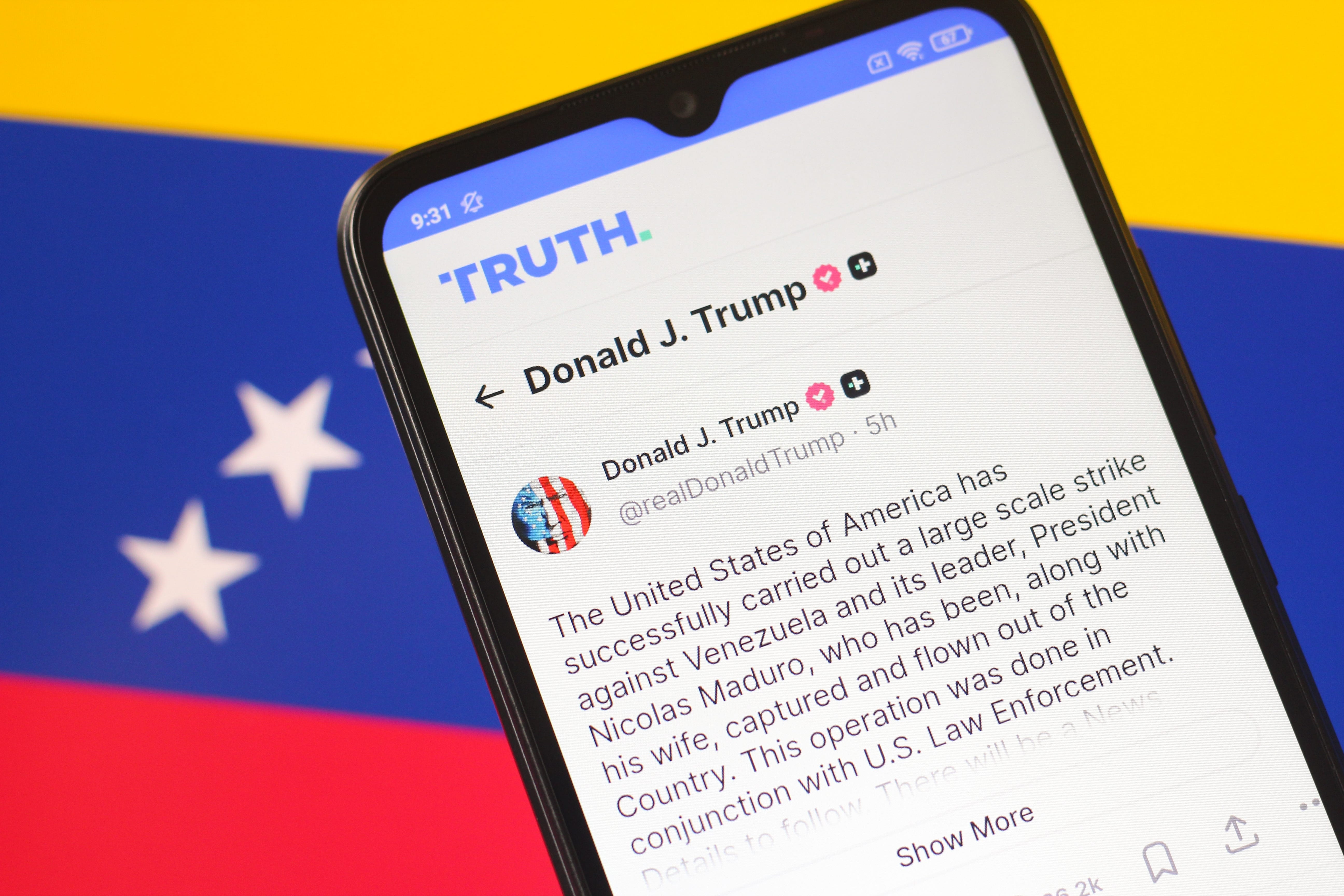
Assertions that the U.S. military action against Venezuela and the arrest of Nicolas Maduro merely supported a law enforcement mission are implausible.
Under the U.S. Constitution, compelling national interest can justify the use of military force. Law enforcement is generally triggered through bilateral treaties, international cooperation under Interpol, and United Nations Conventions, along with other international norms and practices. The Venezuela invasion on January 3 smacks of abuse of military power, and the disregard of legal authorities.
The Trump Administration claims that the U.S. invasion of Panama to capture General Manuel Noriega in December 1989 provides precedent that, at least in part, justifies the recent attack on Venezuela. Without weighing in on the ultimate legality or legitimacy of Noriega’s capture, the differences between the two actions are material enough such that the Panama incident cannot be used to countenance Maduro’s arrest.
In the fall of 1989, I joined a small office in the U.S. Justice Department, the Office of International Affairs (OIA), responsible for engaging with foreign counterparts to combat drug-trafficking and transnational crimes. I spent the remainder of my career working in that office until I retired in 2019.
While I didn’t work directly on the Noriega case, I followed it closely because of its important international and domestic law implications, as well as the interagency nexus. In fact, because of justice stakes, OIA had an attorney sitting in Justice Department’s interagency command center to help ensure U.S. law was followed for Noriega’s arrest and securing of evidence.
Based on my own personal experience in 1989 and my decades within OIA, I see stark differences between what happened in Venezuela and what occurred almost 40 years ago in Panama.
Jurisdiction for Military Presence: This past weekend, the U.S. military had no invitation or authority for their presence in Venezuela, other than a unilateral exercise of war. In sharp contrast, U.S. military troops were posted in Panama prior to exercising U.S. military force culminating in Noriega’s arrest. The U.S. military maintained a garrison there because of U.S. interests and the administration of the Panama Canal. In addition, in late 1989, the U.S. military presence increased with peace-keepers supported by the Organization of American States and others given the volatile situation when Noriega refused to surrender office after losing the election. In short, U.S. military presence in Panama arose lawfully from both bilateral and international authority.
Justification for Action in Panama: In 1989, the peacekeeping coalition in Panama was not able to quell disorder. Instead, along with other unrest, Noriega’s loyalists killed a U.S. Marine out of uniform. That murder is largely attributed to President George H.W. Bush’s determination that existing U.S. troops, as well as others, could not be protected without offensive action. Unlike the Maduro arrest, the capture of Noriega was a consequence of U.S. military action, not the rationale for it.
Supporting Democratic Values: Before Noriega was arrested, the opposition Panamanian leader Guillermo Endara was sworn in as Panama’s president at a U.S. military base during the first night of the invasion. Endara had been widely confirmed as receiving the popular vote, despite Noriega’s unwillingness to accept defeat. Although a Venezuelan opposition party leader reportedly defeated Maduro two to one in a 2024 election, the Trump Administration maintains the United States will run the country with Maduro’s political party and seems to refuse to consider the legitimacy of any of the opposition leaders.
Recognizing Sovereignty: The Bush Administration did not use its military operation as an opportunity to reset the turnover date of the Panama Canal to Panama (scheduled for 1999), a move that likely would have served U.S.’s geopolitical and commercial interests. Conversely, the Trump Administration has stated its intent to secure Venezuelan oil and U.S. oil company investments for economic gain.
The Bush Administration spoke of promoting justice and democracy by restoring Panama to its elected and rightful leader, quelling unrest, and arresting Noriega for prosecution.
The Trump Administration claims to have directed a military invasion against Venezuela as necessary to support the arrest of its president on federal drug-trafficking charges. There were other options available, such as an international arrest warrant or building a coalition of like-minded partners to pursue Maduro. Despite the claim that this was to effectuate an arrest, following the U.S. military action the Trump Administration has spoken emphatically not of justice but of U.S. rewards in seizing Venezuela’s valuable oil-and-gas reserves.
These differences between Noriega’s arrest in Panama and Maduro’s in Venezuela have long-term consequences. Transnational crime – drug-trafficking, corruption, money-laundering, and related coercion and violence – will not be resolved without collaboration among our law enforcement partners worldwide.
Unilateral action that runs afoul of our bilateral treaties, as well as international law and norms, will impede law enforcement cooperation at home and abroad.
Betsy Burke joined the U.S. Justice Department under the Honors Program and spent six years in the Tax Division before joining the Office of International Affairs in 1989. She dedicated the remainder of her career to international cooperation, informally through U.S. law and Memoranda of Understanding, and formally under more than 200 extradition and mutual legal assistance treaties, as well as international conventions. Her career focused on apprehending criminals and gathering evidence abroad for U.S. prosecutions and, incidentally to that legal work, promoting the rule of law among United States partners throughout the world until her retirement in late 2019.
 | A guest post by
|
The US bombed Caracas killing Venezuelan soldiers, guards, and civilians as well as 32 Cubans. That is a military attack, not an arrest. It was not a "surgical strike" but a large, expensive, military action involving the Southern Command Naval Fleet and other military forces, preceded by months of deadly attacks on civilian, presumably drug-carrying, boats, that violated due process.
In previous military actions, whether warranted or maybe not, the US has acted in coalition with other nations, not alone, giving international legitimacy to the actions.
The consequences of this attack are to notify the world that the US will bully instead of cooperate, will violate treaties, contracts, and international laws and organization rules, and has no respect for allies. It shows that the US government does not honor its own laws. It shows the administration's view of the world as a small set of fiefdoms instead of a collection of over 200 sovereign nations. Further, with Trump immediately ruling out the possibility of restoring the presumed winner of the 2024 Venezuelan election, and instead working with Maduro's VP and cabinet, it shows that the administration does not respect the outcomes of elections in other countries..
This attack had something to do with oil, little to nothing to do with drugs, a little to do with the administration's hatred of left-wing politicians and Trump's belief in voting machine conspiracies, but was mostly a grab of raw power over the hemisphere and act of intimidation, with a justification of flimsy, ever-changing excuses.